
FOSOURCE / A BETTER BRIEF
Custom Woodwork Quote: What to Include in Your Brief
Six details to gather before requesting a quote for bespoke furniture or wooden objects — and how to describe what is fixed, flexible or still open.
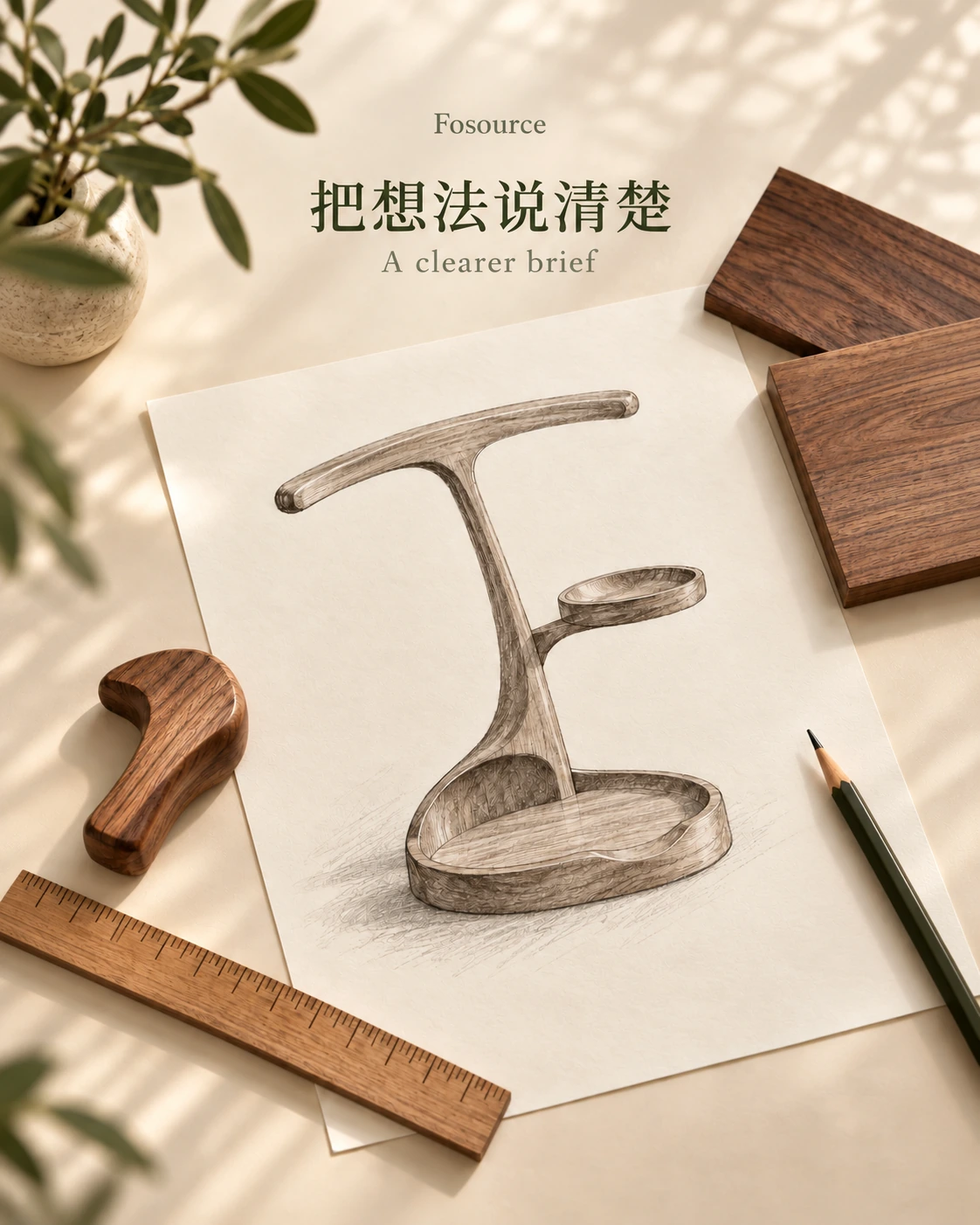
A custom woodwork enquiry often starts with something incomplete: a sketch, a reference photograph, a few dimensions or a 3D model. That can be enough to open a useful conversation. The next step is to separate the features you already know from the decisions that still need to be developed.
For furniture and wooden objects, a clear brief helps explain both the appearance you want and the job the piece needs to do. It gives the maker a basis for discussing scope, feasibility, sampling and quotation. This guide sets out six types of information to gather before you ask for a custom woodwork quote, followed by a simple example you can adapt.
1. References: explain what matters in the image
A reference image shows an overall impression, but it rarely explains every requirement. Identify the parts you want to carry forward: the silhouette, a curved edge, the arrangement of compartments, the visible grain or a particular surface quality. If you send several references, give each one a purpose. One might describe the form while another explains the finish.
A quick annotated sketch is often more useful than a collection of unexplained pictures. Mark the features that must remain and those you are happy to discuss. If you have drawings or a 3D file, include them with a short description of what each file represents. A visual reference alone should not be treated as a complete specification for construction, fit or performance.
2. Dimensions: include units and critical clearances
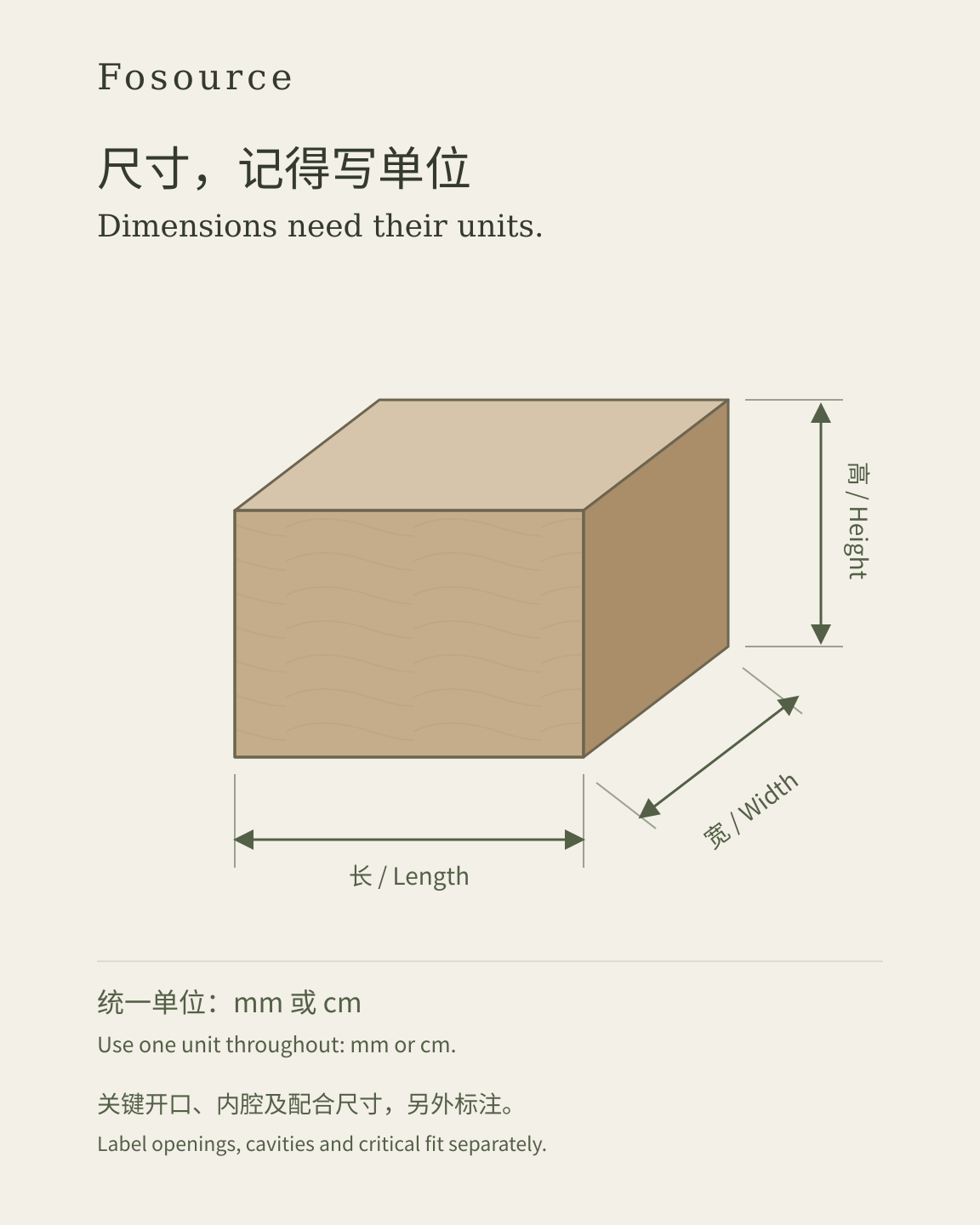
Start with the overall length, width and height, and state the units. Avoid mixing centimetres and millimetres without labels. For an object that holds, displays or fits around another item, also give the relevant internal dimensions or the size of the mating part.
Separate fixed dimensions from preferences. A cabinet fitting into an existing alcove may have a fixed maximum width. A freestanding display object may allow some adjustment to improve proportion or construction. Explain these priorities rather than leaving the person reviewing the brief to infer them.
Critical openings, moving parts and assembly interfaces deserve their own notes. A general enquiry does not need to resolve every manufacturing detail, but it should identify where fit matters. Any numerical tolerances should be agreed for the specific project rather than copied from an unrelated example.
3. Material and finish: describe the use as well as the look
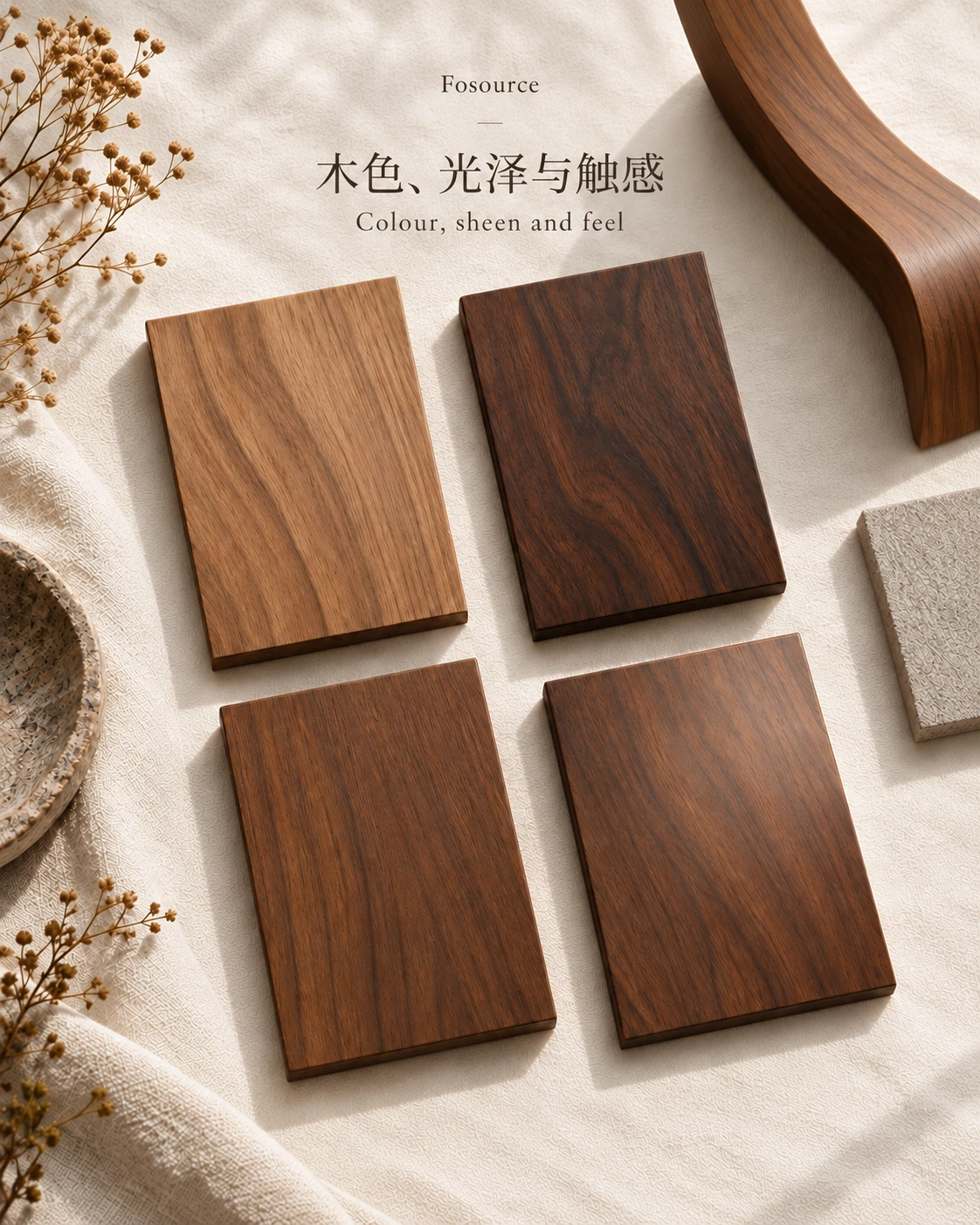
If you know the desired timber, name it. If you do not, describe the colour, grain character and visual weight you are looking for. State whether different materials or constructions can be proposed. Material preferences are a starting point for review, not confirmation that a particular board, construction method or finish is available for the project.
The use environment matters too. Explain whether the piece will be used indoors or outdoors, its likely exposure to moisture, and any surfaces it will regularly contact. The USDA Forest Products Laboratory notes that wood responds to surrounding moisture conditions and that moisture control is important in limiting dimensional problems.[1] This is one reason a brief should describe the intended environment, not just a photograph of the desired colour.
For the finish, describe colour, sheen and feel separately. A screen image can help communicate a direction, but lighting, the display and the timber itself affect the appearance. Where the finish is important, discuss whether a physical sample or detail sample is needed before the production specification is agreed. Do not assume that a named finish will make every timber look identical.
4. Quantity: distinguish a one-off from a small series
State how many pieces you need now. If a larger quantity is only a possibility, label it as such. A single commission and a small series can involve different planning for development, fixtures, sampling and assembly. The relevant work must be assessed for the actual design; a higher quantity should not be assumed to produce a particular saving before review.
It also helps to say whether every piece is identical. A series of objects with different internal layouts is a different brief from a batch of repeated parts. List the variations early, even if the external silhouette remains the same.
5. Timing and destination: define the date you mean
A target date can mean the date a piece is ready to leave production or the date it must arrive at its destination. Say which one applies. Give the delivery country or region and flag any access, assembly or packaging constraints already known.
If the date is flexible, describe the preferred window. If the design is still developing, allow the discussion to cover drawings, material decisions and any sampling before committing to a production timeline. This checklist does not imply a standard lead time; the schedule belongs in the project-specific agreement.
6. Intended use and decision priorities
Tell the maker how the piece will be used. A display object, a storage piece and a surface supporting equipment have different questions to resolve. Explain the contents, interactions and practical requirements that are important to you. If there are performance requirements, identify them rather than assuming they can be read from the reference.
Then list your priorities. Is the exact outline essential? Is the internal layout fixed? Can dimensions change slightly? Is there a working budget range? A budget is useful context when you are comfortable sharing it; it is not a substitute for defining the work. Clear priorities make it easier to discuss alternatives without losing the purpose of the commission.
A short example of a useful enquiry
“An indoor wooden display object, one piece. Approximate overall size: 400 × 200 × 180 mm. The flowing outline in Reference A is important; the internal arrangement can be discussed. I prefer a dark timber tone with a low-sheen surface. It will hold three objects, whose dimensions are attached. Please discuss feasibility, any detail sampling and the likely stages before confirming the quotation. Delivery destination and preferred timing are included separately.”
This is an illustrative brief, not a real customer project or a quoted product. Its value lies in identifying what is fixed, what is flexible and what remains unknown.
What happens after the first brief?
The next conversation should resolve the scope of review: which drawing is current, which dimensions govern the piece, which materials and finishes need confirmation, and whether a detail sample is appropriate. For complex curved forms, machining access and workholding may affect the proposed route. Machine-maker guidance on five-axis work also treats workpiece size, tools, holding and programming as planning considerations.[2] The appropriate machining route still needs to be assessed for each design.
An early discussion or estimate should be clearly distinguished from an agreed production specification. Before making proceeds, the applicable quotation, drawings, finish expectations, quantity and delivery scope need to be confirmed for that project.
Start with what you have
You do not need to invent answers to complete a brief. Label uncertain items “to discuss” and provide the information already available. A useful beginning is a reference, approximate dimensions, quantity and an explanation of the intended use.
Explore Fosource’s bespoke woodwork or use Start a Project to share your starting point. The current enquiry page accepts drawings or reference files and asks for the project idea, quantity and delivery country or region. Review the page for the current submission requirements.
References
- 1. USDA Forest Products Laboratory — Wood Handbook, Chapter 13 (2021)
- 2. Haas — 5-Axis Machines: workpiece, tooling, workholding and programming
YOUR STARTING POINT
Have a sketch in mind?
Share your references, dimensions and quantity. We can discuss the details that still need to develop.
Start a project ↗